Themes
United front
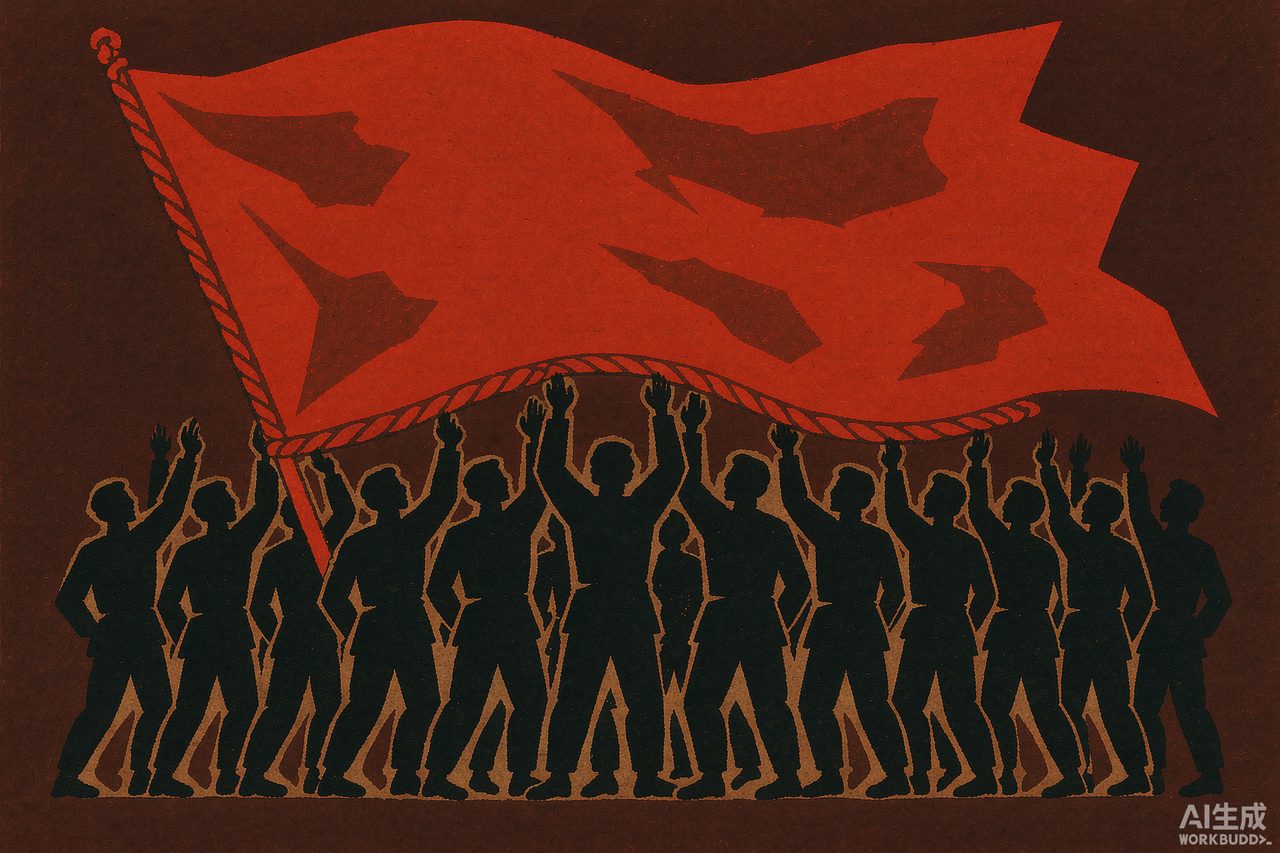
1935–1949 · Unite all forces that can be united — the evolution of tactics from the Anti-Japanese united front to the people's democratic united front.
Background
The united front is one of the 'three magic weapons' running through the whole collection (the other two being the building of the Party and armed struggle). The essays under this theme give the concrete answers, period by period, to the fundamental question 'who are our friends and who are our enemies'. On Tactics Against Japanese Imperialism (1935) marks the shift of policy from 'oppose Chiang' to 'compel Chiang to resist Japan'; The Tasks of the Chinese Communist Party in the Period of Resistance to Japan and The Situation and Tasks in the Anti-Japanese War After the Fall of Shanghai and Taiyuan lay down the principle of independence and initiative within the united front; Current Problems of Tactics in the Anti-Japanese United Front systematically advances the line of 'develop the progressive forces, win over the middle forces and isolate the die-hard forces'. The character of these writings is the tension they keep between firmness of principle and flexibility of tactics: neither losing autonomy for the sake of the united front, nor closing the door to alliance for the sake of struggle. They are key texts for observing the logic of political coalition in twentieth-century China, and they show how 'alliance politics' adjusts with the changing balance of forces. From the angle of strategic thought, what this theme stresses again and again is 'differentiation': separating the principal enemy from the secondary, the die-hard forces from the middle forces, those who can be won over from those who must be isolated. This fine-grained analysis of interests enabled a party militarily inferior to keep enlarging its political base. Behind it lies a clear-eyed realism: an alliance is not an ornament of ideals but a result recalculated as circumstances change, bound together by common interests. That is why these writings go far beyond the partisan struggles of one place and time and become a general lesson in coalition politics. On Policy and Unity to the Very End carry the united front's principles into the concrete administration of the base areas: in arrangements such as rent and interest reduction and the 'three-thirds system', the logic of alliance is converted into workable techniques of governance. Notably, this theme always refuses to read the united front as unprincipled compromise — the qualifier 'independence and initiative' ensures that alliance does not erode one's own political subjecthood. Viewed in the structure of the whole book, the united front stands with armed struggle and Party building among the three magic weapons precisely because it solves the strategic problem of 'how a small force mobilizes the many'; the three support one another and none can be dispensed with. This also shows that in these writings alliance is never an end in itself: it exists so that, even when the balance of forces is unfavourable, one can still secure the widest possible room for action.
Excerpts from the text
Having surveyed the situation with regard to both the counter-revolution and the revolution, we shall find it easy to define the Party's tactical tasks.
— On Tactics Against Japanese Imperialism
In the period of the anti-Japanese united front, struggle is the means to unity and unity is the aim of struggle. If unity is sought through struggle, it will live; if unity is sought through yielding, it will perish.
— Current Problems of Tactics in the Anti-Japanese United Front
Behind the enemy lines, the idea of “everything through” is impossible, for there we have to act independently and with the initiative in our own hands while keeping to the agreements which the Kuomintang has approved (for instance, the Programme of Armed Resistance and National Reconstruction).
— The Question of Independence and Initiative Within the United Front
Modern relevance
The modern significance of the united-front theme lies in its fine-grained analysis of 'coalition politics': how to identify common interests, how to handle differences inside an alliance, and how to widen the base of support while holding to one's own aims. This way of thinking — making the relationships of enemy, self and friend dynamic — has referential value for any public undertaking that needs broad cooperation. It reminds the reader that an alliance is not a fixed declaration but a result recalculated as circumstances change; 'winning over the middle forces' is essentially a pragmatic appeal to the majority, not a blurring of positions. Such strategic awareness can inspire any activity that needs to mobilize broad support. The most useful feature for the present reader is its distinction between the two layers of 'principle' and 'tactic': no compromise on fundamental aims, flexibility in concrete alliances. This layered handling avoids either/or thinking and lets an organization create room to manoeuvre in an adverse environment. Treat it as a historical document on 'how to enlarge consensus' — its technical details belong to a particular era, but the underlying logic of alliance is not out of date for any collective action that requires cooperation. The writings also teach the long cultivation of the 'intermediate zone': they assume most people are not naturally opposed but can be won over by concrete interests and clear positions. This patience toward 'those who can be won over' is less a matter of tactical flexibility than a respect for social complexity. In public discussion today, either/or frames often obscure the real position of middle groups; the united-front writings remind us that identifying and winning this intermediate zone is often the decisive factor. Connected with this is their restraint about 'isolation': better to shrink the opposing side to the minimum than to make enemies lightly — a calculation aimed at reducing the number of one's enemies, itself a realism worth noting.
Unite all forces that can be united — the evolution of tactics from the Anti-Japanese united front to the people's democratic united front.